A standard, handed on.
Two lines run through this site. One is the set of rules the world has written for research on people since 1947. The other is a line of physicians from this corner of Ontario who learned medicine beside their patients and teach it the same way. The two meet in every trial run at 304 Victoria Avenue North.
- The rules of research
- The practice, one line of physicians
-
1857The practice
A rector's son arrives in Dundas
William Osler's family moves to Dundas, now part of Hamilton, when his father becomes rector of St. James' Church. The boy grows up at 30 South Street West, a house that still stands.1,2
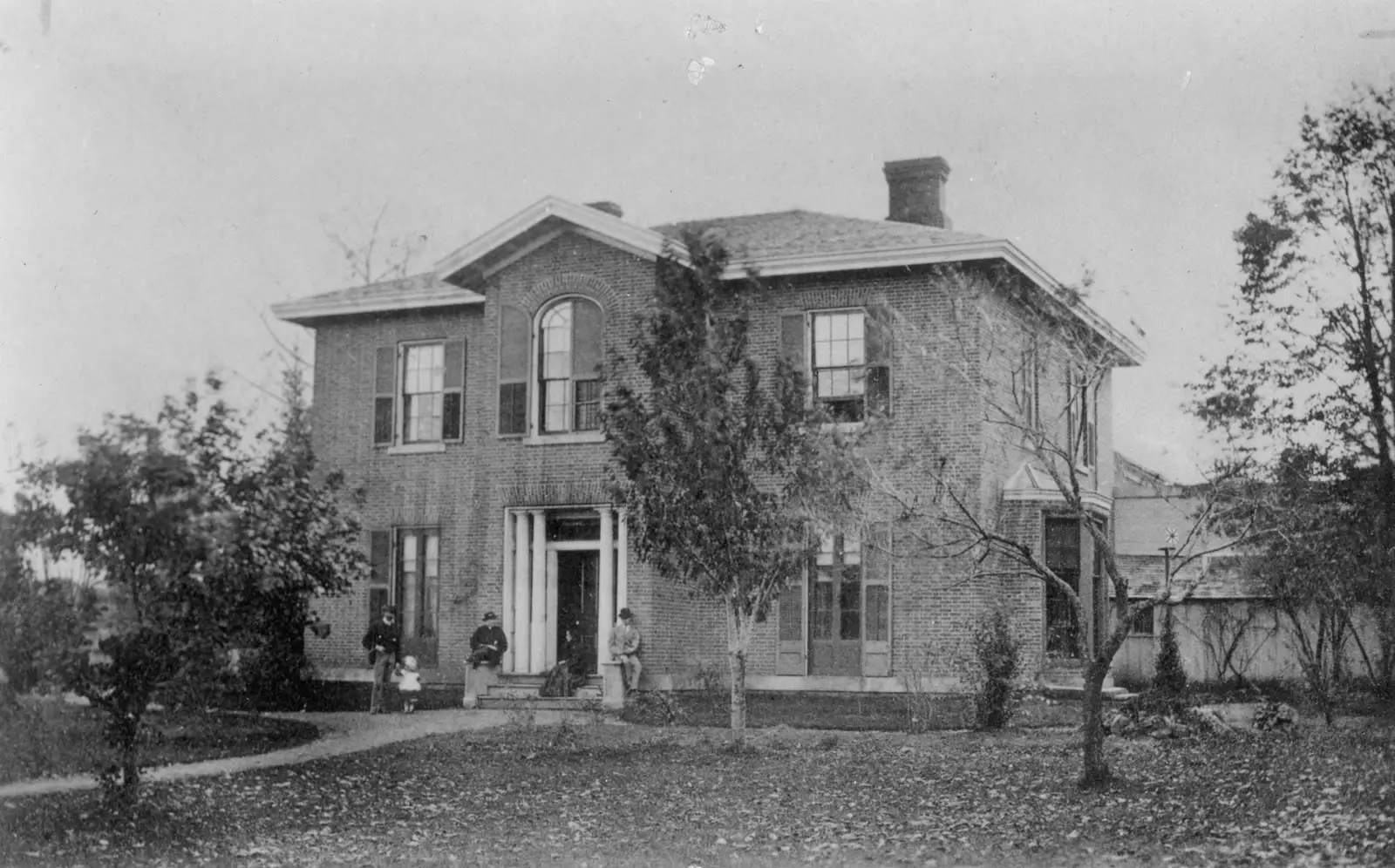
The Osler homeOsler’s boyhood home in Dundas, Ontario, around 1900. The house, at 30 South Street West, still stands. -
1889The practice
Osler builds the residency
At the new Johns Hopkins Hospital, Osler and his colleagues build the residency: young doctors learning medicine on the wards, beside experienced ones. It is how physicians have been trained since.3
-
1947The rules
The Nuremberg Code
After the Doctors' Trial, the judges set out ten principles for research on people. The first reads: the voluntary consent of the human subject is absolutely essential.4
-
1964The rules
The Declaration of Helsinki
The World Medical Association adopts its statement of ethical principles for medical research involving people: written by physicians, for physicians, and revised ever since.5
-
1969The practice
McMaster opens its medical school
McMaster's first medical students start a programme built around small groups working through real clinical problems, a way of teaching medicine that schools around the world went on to adopt.6
-
1979The rules
The Belmont Report
Three principles for research involving people that ethics review works from today: respect for persons, beneficence, and justice.7
-
1980The practice
Richard Tytus graduates from McMaster
With a pharmacy degree already behind him, he earns his MD at McMaster and stays in Hamilton to practise family medicine. He practises here today.15
-
1991The practice
Evidence-based medicine gets its name
At McMaster, Gordon Guyatt names the idea that clinical decisions should rest on the best available evidence. Well-run trials are where that evidence comes from.8
-
1995The practice
Hamilton Medical Research Group
Dr. Tytus founds a research site in his own community, so that patients here can reach investigational treatments without driving to Toronto for them.15
-
1996Where the lines meet
One standard for every trial
Regulators and industry from Europe, Japan, and the United States agree on a single international guideline for Good Clinical Practice, and Health Canada adopts it the following year. The site was a year old. From here the two lines run as one: every trial at the site is run to GCP.9,10
-
1996The practice
He starts teaching where he trained
Dr. Tytus joins McMaster's Department of Family Medicine as an Assistant Clinical Professor (Adjunct). He has held the appointment for thirty years.15
-
1998The rules
Canada's Tri-Council Policy Statement
Canada's three federal research agencies publish a single, shared policy on the ethical conduct of research involving humans.11
-
2025The rules
Good Clinical Practice, rewritten
ICH finalizes E6(R3), the first complete rewrite of GCP in almost thirty years: quality designed in from the start, oversight in proportion to risk, and room for the digital tools trials now run on. Health Canada puts it into effect in April 2026.12,13
-
2026March 30The practice
The site starts running on Lodestar
An operations system the site built for itself begins running the site's trial operations, every working day. The software keeps the record. The people keep the responsibility.
How the site is run -
April 27The practice
Roche Phase III initiation visit completed
Roche and its CRO complete the initiation visit at 304 Victoria Avenue North: protocol training, systems access, and a review of the facility.
Read the update -
May 7The practice
Screening opens and fills within 72 hours
Roche activates the site on May 4. Screening opens the next day, and every screening slot for May is filled within 72 hours.
Read the milestone -
June 10The practice
First participant randomized in a Roche Phase III study
The first participant is randomized in the Roche Phase III study, the first trial run in the site's newly expanded research suites.
Read the milestone -
Next
Handed on
Osler's residency is still how medicine is learned: beside someone who holds the standard. Dr. Tytus has taught at McMaster for thirty years. Physicians in training now learn clinical research the same way, at this site, beside him.
Check any of this independently
Every outside date on this page links to a record HMRG does not control. The site’s own milestones link to their announcements, and Dr. Tytus’s dates to his biography, where each one has an independent check.
- Osler's boyhood in Dundas Dictionary of Canadian Biography, “Osler, Sir William”
- 30 South Street West, Dundas City of Hamilton By-law 25-224 (December 2025), designating the Osler House a property of cultural heritage value
- Osler and the residency Johns Hopkins Medicine, Osler Medical Residency: history
- The Nuremberg Code (1947) United States Holocaust Memorial Museum, Holocaust Encyclopedia
- Declaration of Helsinki (1964) World Medical Association, original 1964 text
- McMaster's first medical class (1969) McMaster Faculty of Health Sciences, #MacMed50
- The Belmont Report (1979) U.S. Department of Health and Human Services, Office for Human Research Protections
- “Evidence-based medicine” (1991) Guyatt G. Evidence-based medicine. ACP Journal Club 1991;114:A-16
- ICH E6 Good Clinical Practice (1996) International Council for Harmonisation, Efficacy Guidelines (E6)
- Health Canada adopts ICH E6 (1997) Health Canada, Good Clinical Practice: Consolidated Guideline (ICH E6)
- Tri-Council Policy Statement (1998) Government of Canada Publications, TCPS (1998)
- ICH E6(R3) (2025) International Council for Harmonisation, Efficacy Guidelines (E6(R3), Step 4, January 6, 2025)
- Health Canada implements E6(R3) (2026) Health Canada, notice to stakeholders
- OCFP Family Physicians of the Year CHCH News, “Hamilton doctor receives recognition” (the award goes to seven Ontario family doctors a year)
- Dr. Richard Tytus Biography and credentials, each with an independent check
Photograph of the Osler home: William Osler Photo Collection, Osler Library of the History of Medicine, McGill University. Via the U.S. National Library of Medicine (public domain). Catalogue record
The people holding it today
Seven investigators and a clinical operations team run every trial at the site.